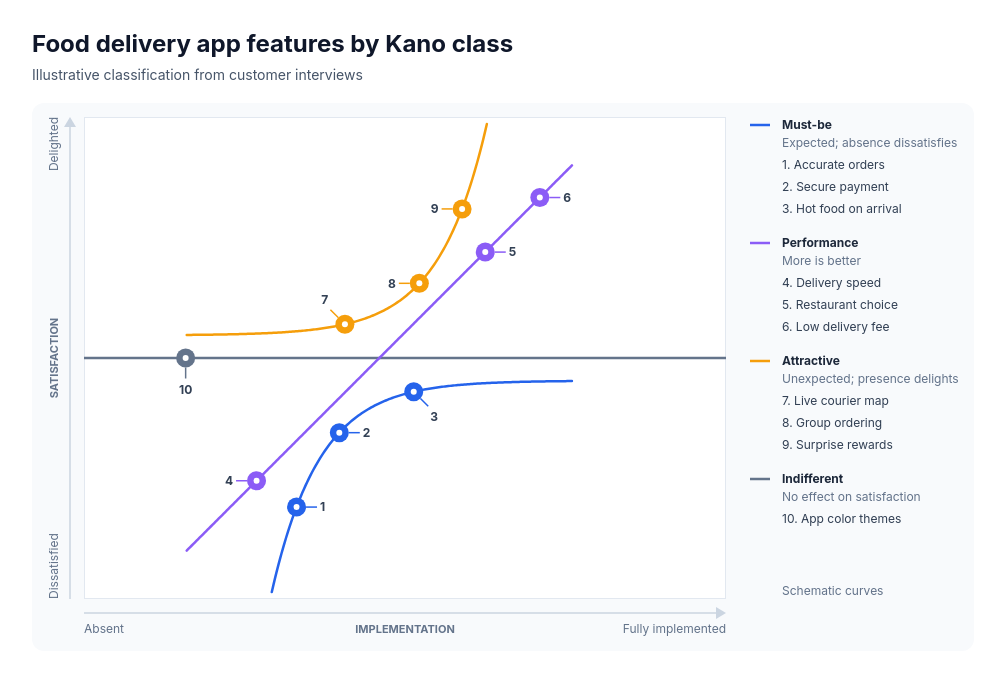
Diagram template
Kano model
Crossed implementation and satisfaction axes carry the three fixed Kano curves: must-be, performance and attractive. 4–12 labeled features sit on the curve of their supplied class in supplied order, with indifferent features on the neutral line, and a key names each class. Numbered keys join each feature mark to its complete name in the adjacent class list.
Categories
Included in
Power, Max
When to use it
Suits classifying product features, service attributes, onboarding steps, store amenities or benefits by how their presence affects satisfaction, for product, service and customer-experience reviews. Not for measured satisfaction scores or survey results plotted as data: positions along each curve are qualitative and the curves are schematic.
Adjust after generating
Change the style, colors, and font, and these options, as often as you like without spending credits.
- Typography
- Spacing
What you fill in
Describe your topic in plain words and the AI fills these in. You can edit every field afterwards.
- Features
- 4 to 12, each with label and kind
- X axis
- Label, low, and high
- Y axis
- Label, low, and high
- Kinds
- Exactly 4, each with kind, name, and description
Related templates
All framework templates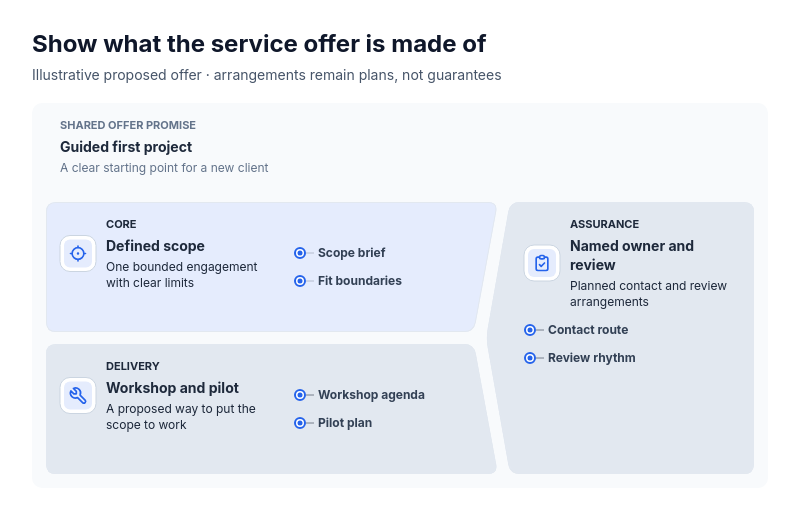 Anatomy: crowned subjectFor explaining what one thing is made of as a primary part, the part that carries it out and a part that spans both: a service offer (scope, delivery, assurance), a product (core function, how it ships, support), a course (content, format, learner support), an event (program, logistics, hosting) or a team charter (mission, ways of working, backing).
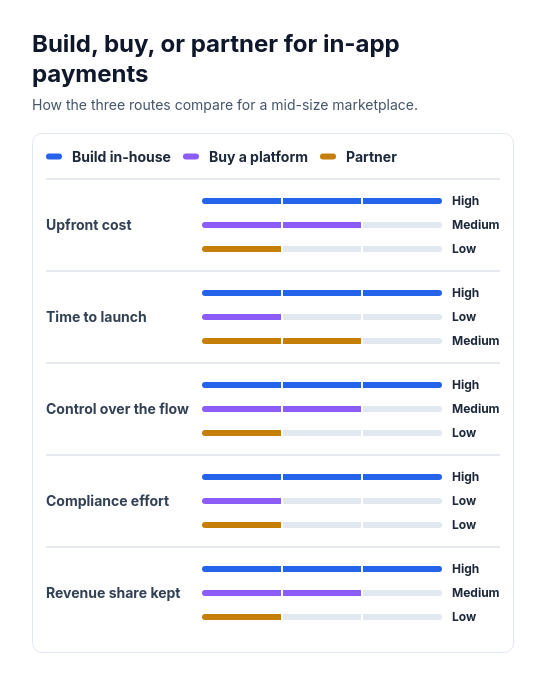 Attribute barsCompare two or three options across three to six attributes that can be scored or rated low, medium, or high, such as cost, speed, and effort.
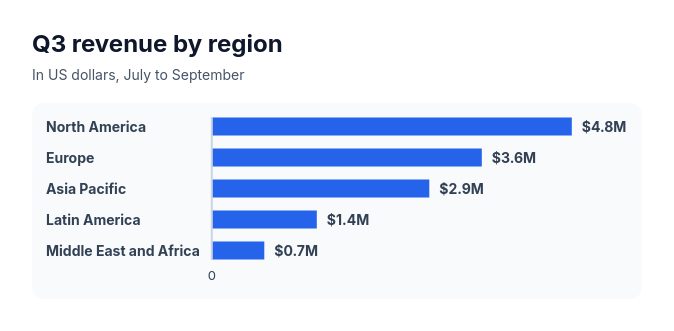 Bar chartCompare three to ten amounts of the same kind, such as sales by region, survey answers, or time per task.
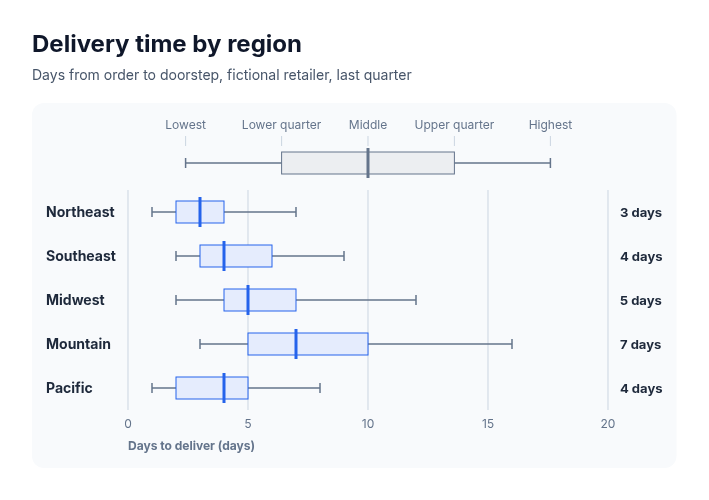 Box plotSuits comparing how values spread across groups when five summary numbers are known for each: delivery times by region, salaries by level, deal sizes by segment, response times by team, test scores by class.
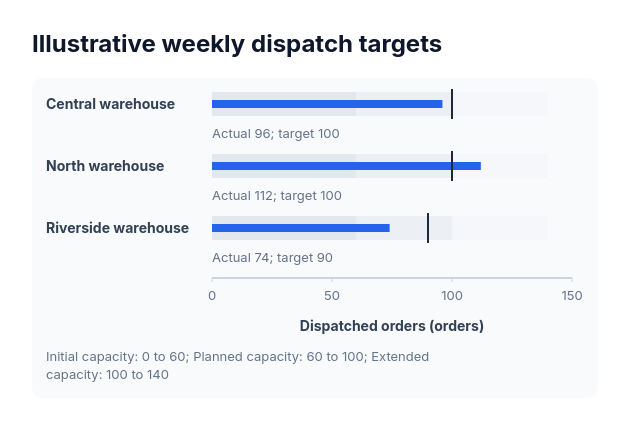 BulletActual-versus-target values sharing one nonnegative scale and explicitly supplied range boundaries.
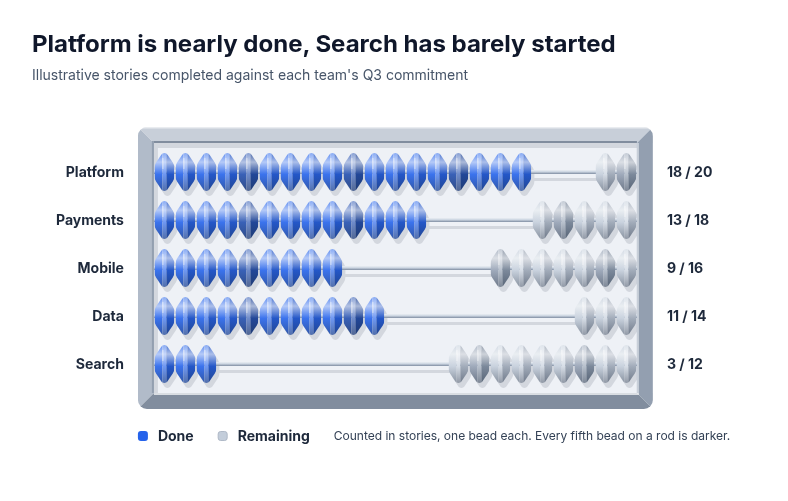 AbacusSuits small whole-number progress compared across a few rows, where each unit should stay countable: sprint or quota progress by team, seats filled by course, orders picked by warehouse, checklist items completed by site.