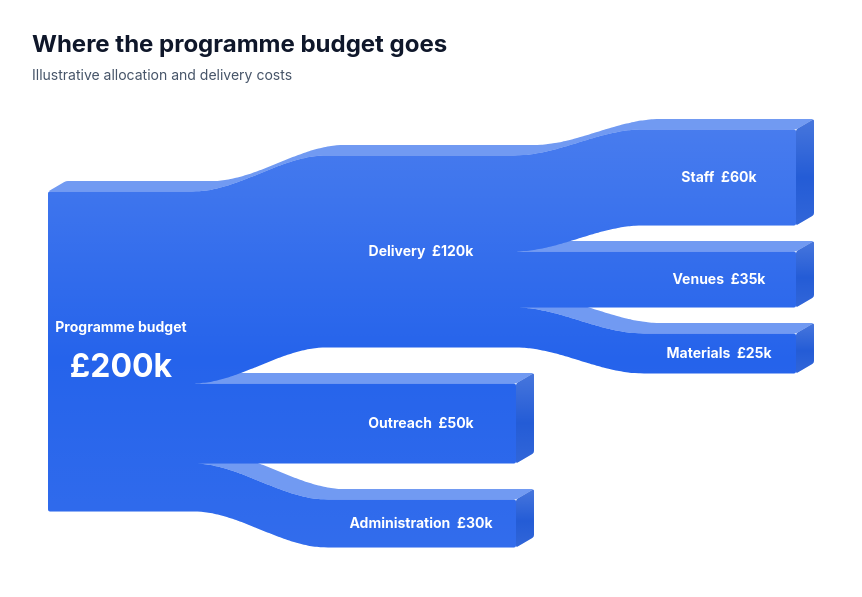
Diagram template
Allocation tree
One substantial front-facing solid splits a derived whole into two to four exact amount-thickness branches. Only the selected parent continues into its two to four actual sub-parts; unexpanded leaves end early, preserving unequal-depth ownership in one coherent silhouette.
Categories
Included in
Max
When to use it
Use for a positive common-unit allocation with two to four parts and an exact complete two-to-four-part breakdown of one selected parent. The whole and both branching levels share one absolute vertical front-thickness scale. Unexpanded leaves have no inferred children. Branch reach, gaps and shallow material depth encode no quantity. The composition rejects zero or negative parts and any positive distinctions or captions that cannot fit their true owned geometry; it never inflates a branch. Not for independent margins, pairwise flow matrices, overlapping groups or normalized child shares.
Adjust after generating
Change the style, colors, and font, and these options, as often as you like without spending credits.
- Typography
- Material
What you fill in
Describe your topic in plain words and the AI fills these in. You can edit every field afterwards.
- Total label
- Text
- Segments
- 2 to 4, each with label and value
- Breakdown of
- Text
- Breakdown
- 2 to 4, each with label and value
- Prefix
- Text
- Suffix
- Text
Related templates
All chart templates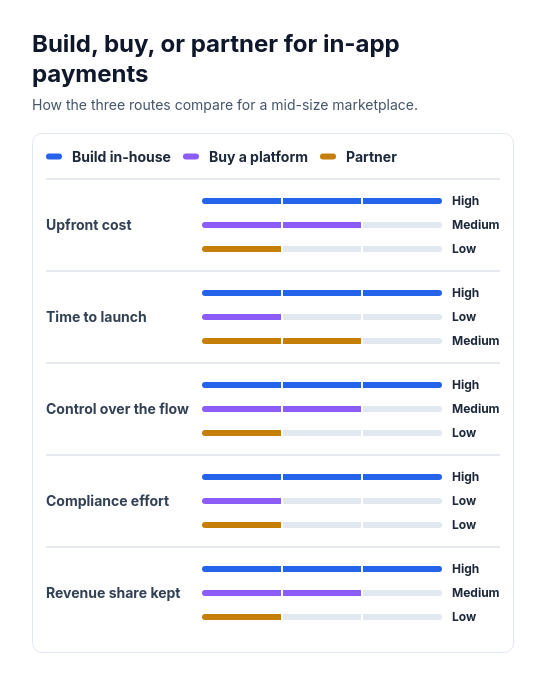 Attribute barsCompare two or three options across three to six attributes that can be scored or rated low, medium, or high, such as cost, speed, and effort.
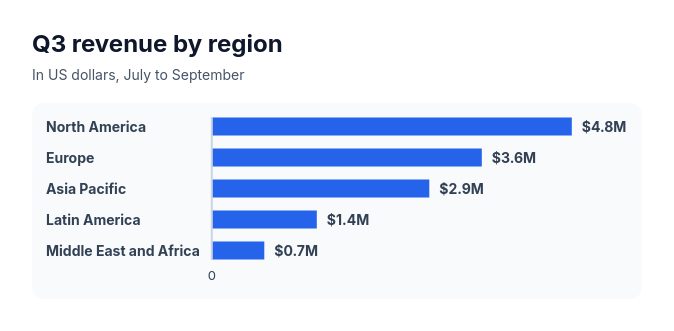 Bar chartCompare three to ten amounts of the same kind, such as sales by region, survey answers, or time per task.
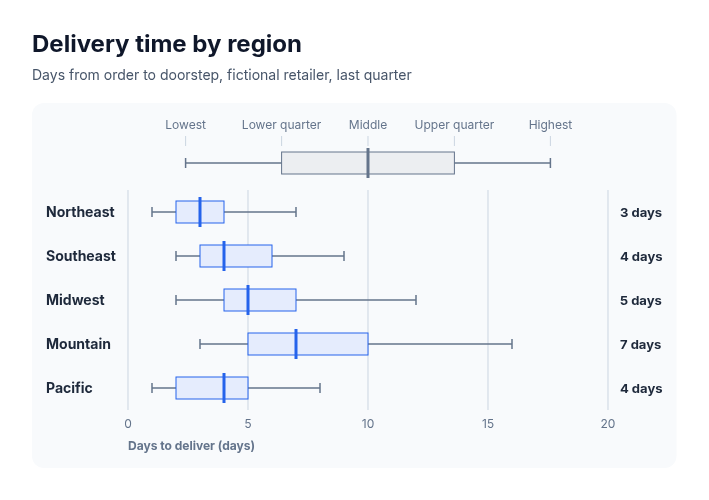 Box plotSuits comparing how values spread across groups when five summary numbers are known for each: delivery times by region, salaries by level, deal sizes by segment, response times by team, test scores by class.
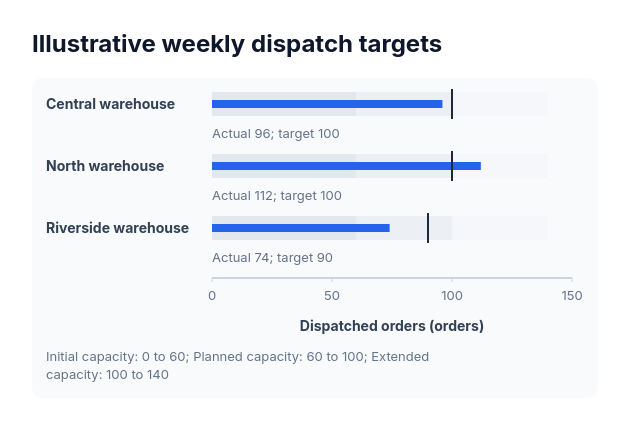 BulletActual-versus-target values sharing one nonnegative scale and explicitly supplied range boundaries.
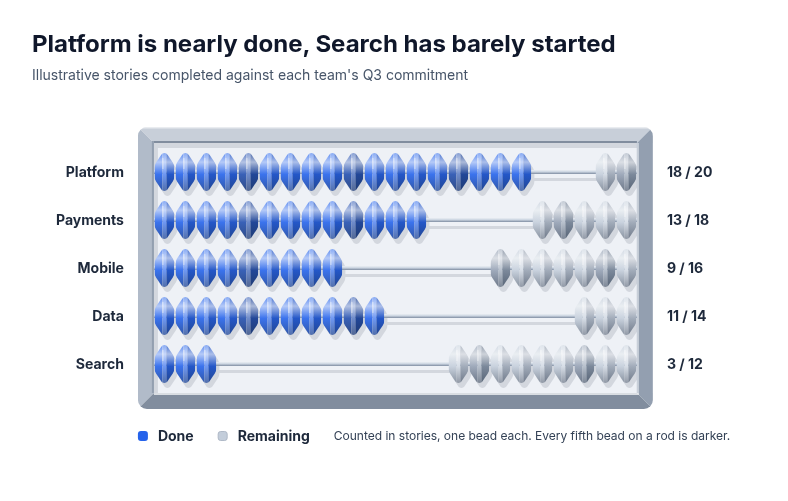 AbacusSuits small whole-number progress compared across a few rows, where each unit should stay countable: sprint or quota progress by team, seats filled by course, orders picked by warehouse, checklist items completed by site.
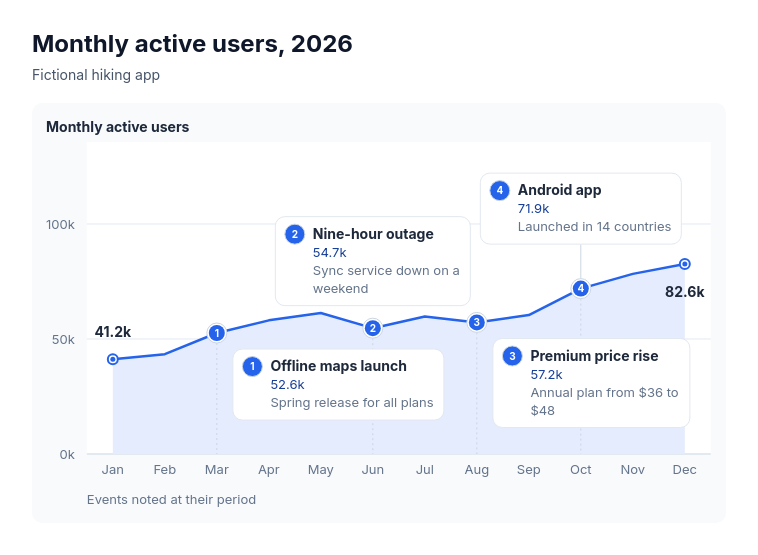 Annotated lineSuits explaining the turns in one measure over time: monthly active users with launches and outages, revenue with pricing changes, support volume with policy changes, website traffic with campaigns, headcount with reorganisations.