
Diagram template
Scorecard: option column cards
A measured criteria column aligns with icon-headed option cards, showing five-dot ratings and optional equal-weight totals.
Categories
Included in
Pro, Power, Max
When to use it
Compare two or three options using supplied whole-number ratings from one to five across three to six criteria. Higher must mean better for every criterion. Not for invented ratings, weighted totals, raw measurements, or yes/no feature lists.
Adjust after generating
Change the style, colors, and font, and these options, as often as you like without spending credits.
- Card shape
- Card fill
- Color distribution
- Card border
- Card shadow
- Typography
- Icon shape
- Icon size
- Icon fill
- Icon shell
- Spacing
- Alignment
- Material
- Totals
What you fill in
Describe your topic in plain words and the AI fills these in. You can edit every field afterwards.
- Options
- 2 to 3, each with name and icon
- Criteria
- 3 to 6, each with name and ratings
Related templates
All comparison templates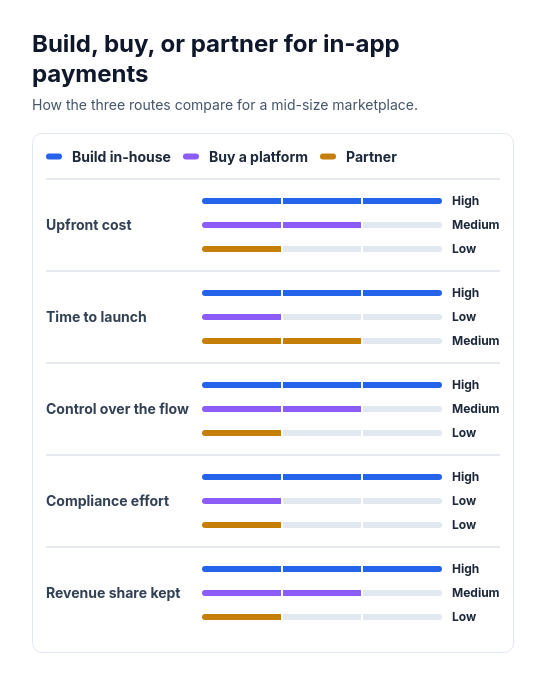 Attribute barsCompare two or three options across three to six attributes that can be scored or rated low, medium, or high, such as cost, speed, and effort.
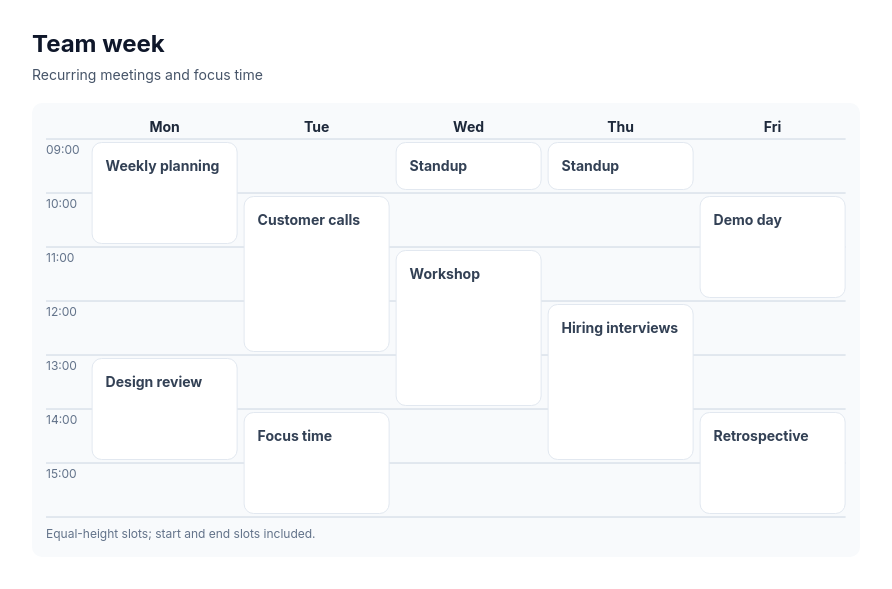 Calendar gridA schedule laid out by period and time slot, such as a week timetable, a conference day plan, a content calendar by week, or a weekly meal or workout plan, with events that occupy one or more consecutive slots.
 BenchmarkPlace one subject against a peer group's spread on two to eight metrics with different units: company or product benchmarks, a store or region against its network, salary or offer positioning against a market survey, a team or school against its organization.
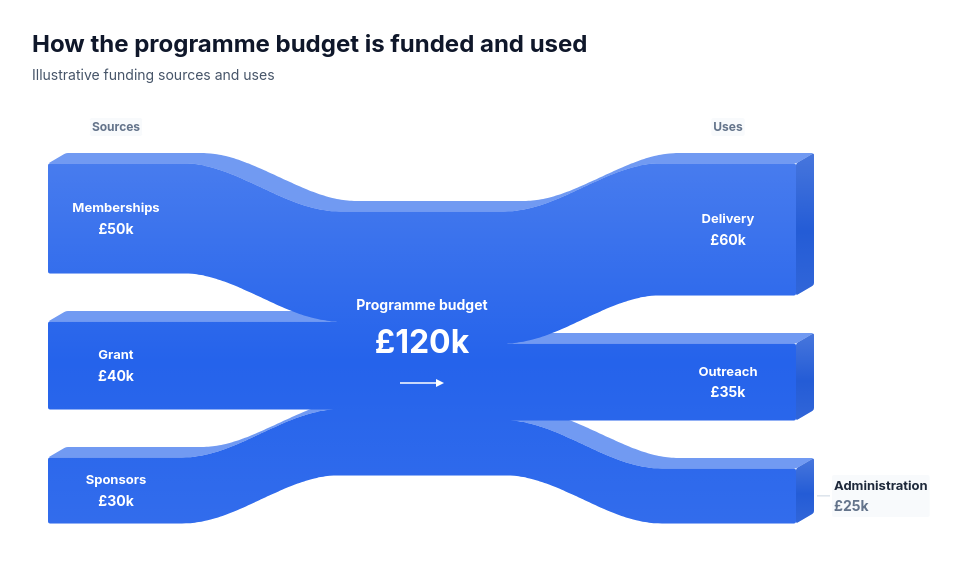 Conserved wholeTwo complete nonnegative marginal breakdowns of one positive common-unit total: funding sources and uses, staffing hours and work allocations, or energy supply and end uses.
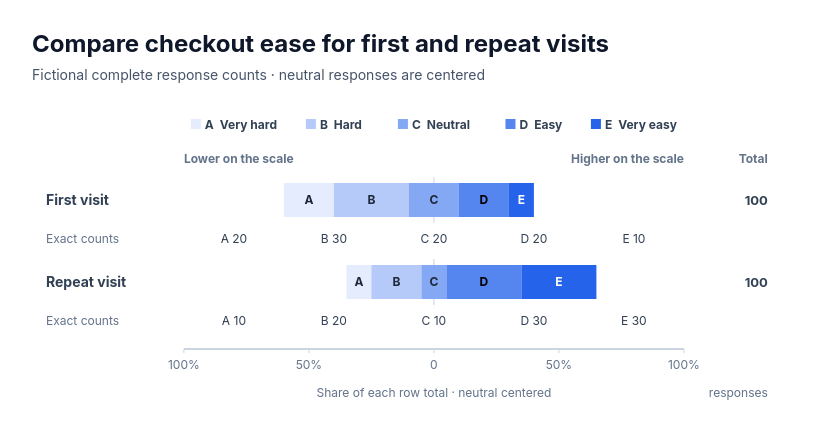 Chart: five-class ordered scaleFor complete supplied counts on one five-class ordered scale compared across two or three groups: survey agreement by segment, review star ratings by product, risk ratings by business unit, performance grades by team or difficulty ratings by release.
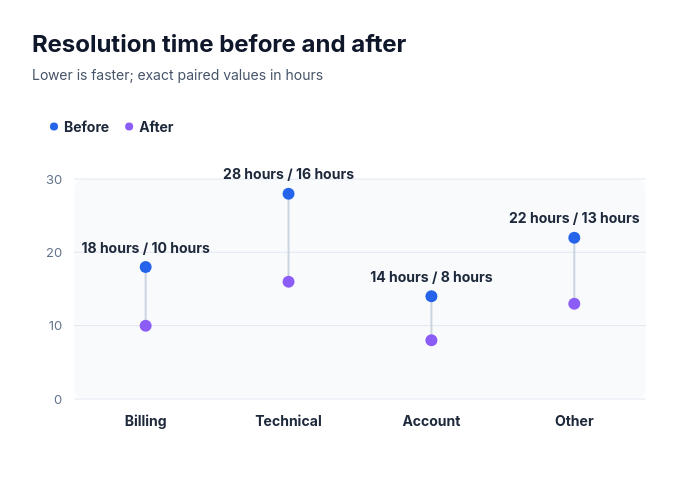 Dumbbell: vertical paired valuesCompare 2–8 paired signed finite before and after amounts as linked vertical points on one common axis.