Diagram template
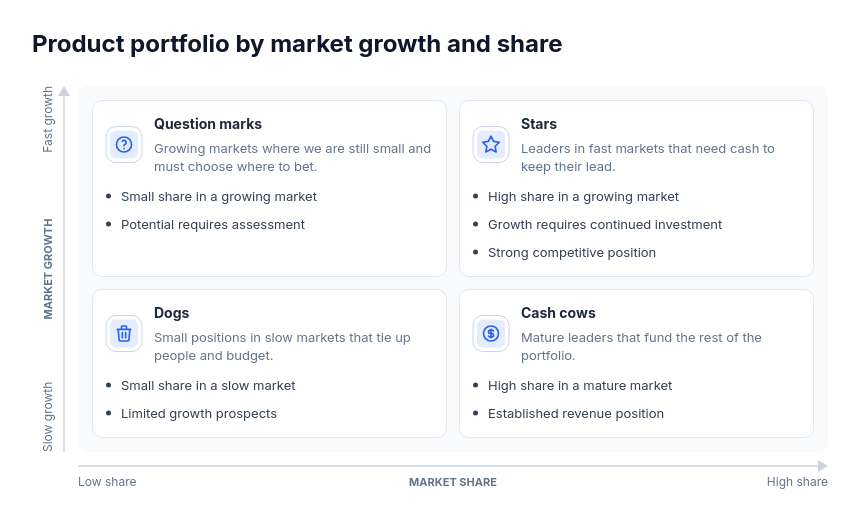
Matrix: quadrant cards with bullet points
Four explicitly positioned quadrant cards with supplied qualitative axis meanings, icons, optional descriptions and one to four points.
Categories
Included in
Pro, Power, Max
When to use it
Use for four groups defined by two axes, such as a portfolio matrix, a skill/will grid, or a positioning map, where each quadrant needs a short explanation. Not for plotting individual items, SWOT analyses, processes, or comparisons of named options.
Adjust after generating
Change the style, colors, and font, and these options, as often as you like without spending credits.
- Card shape
- Card fill
- Color distribution
- Card border
- Card shadow
- Typography
- Icon shape
- Icon size
- Icon fill
- Icon shell
- Spacing
- Alignment
- Material
What you fill in
Describe your topic in plain words and the AI fills these in. You can edit every field afterwards.
- X axis
- Label, low, and high
- Y axis
- Label, low, and high
- Quadrants
- Exactly 4, each with position, title, optional description, icon, and points
Related templates
All matrix templates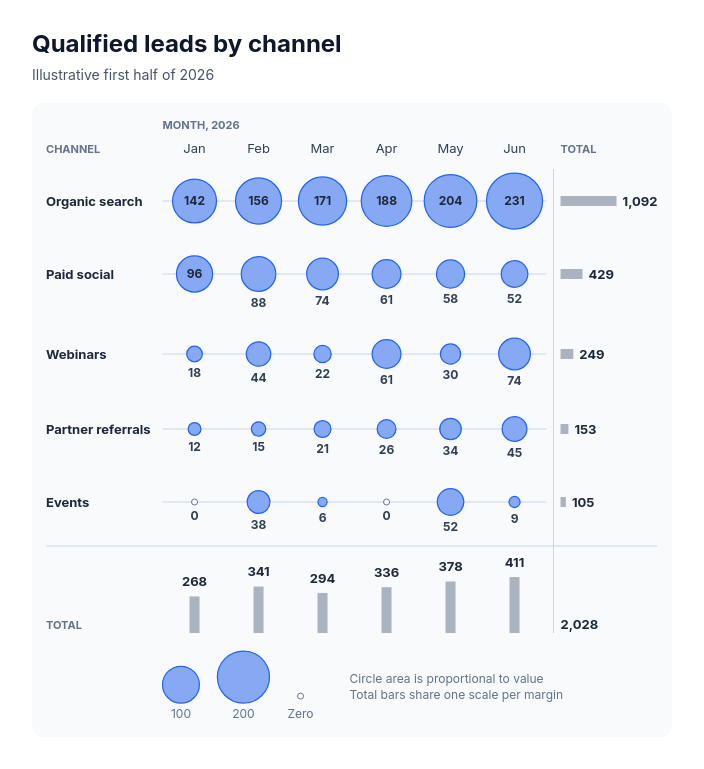 Chart: bubble gridShow how one additive measure spreads across two lists when the pattern of large and small amounts matters more than exact shades, such as leads by channel and month, feature usage by customer segment, skills by team, or orders by store and weekday.
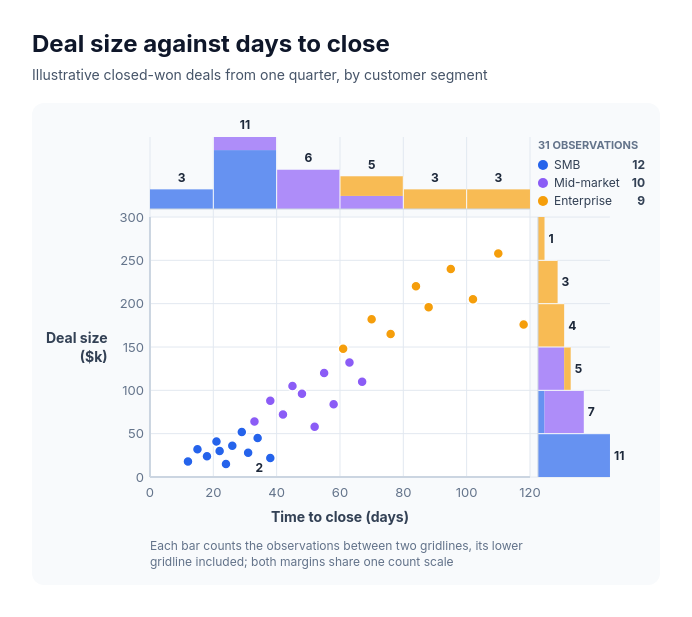 Chart: scatter plotShow how two measures relate across many observations and how each one is distributed, such as deal size against days to close by segment, delivery time against distance by region, customer tenure against monthly spend by plan, or response time against satisfaction score by channel.
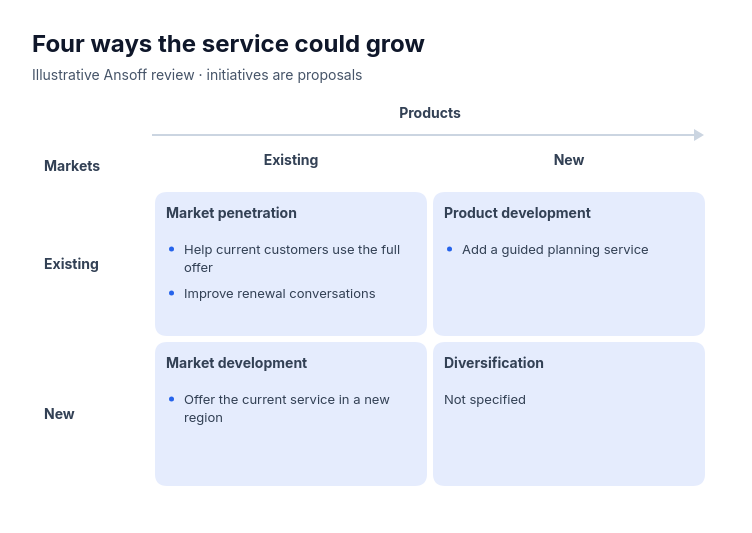 Ansoff matrixFor a product, service or retail offer’s proposed growth choices using explicitly classified initiatives.
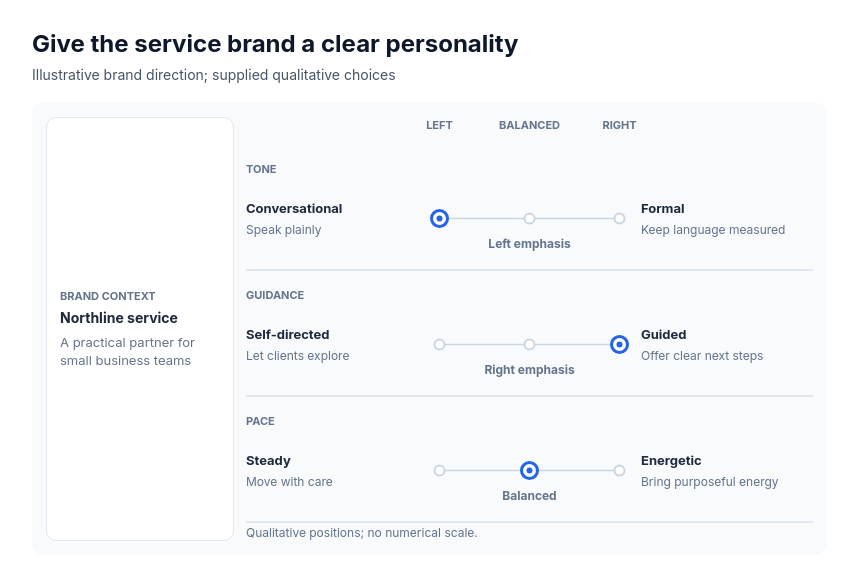 Framework: context panelFor two to four supplied trait pairs with explicitly chosen qualitative positions for one subject: a brand personality, a team's working style, a product's design principles, a leadership stance or a service's character.
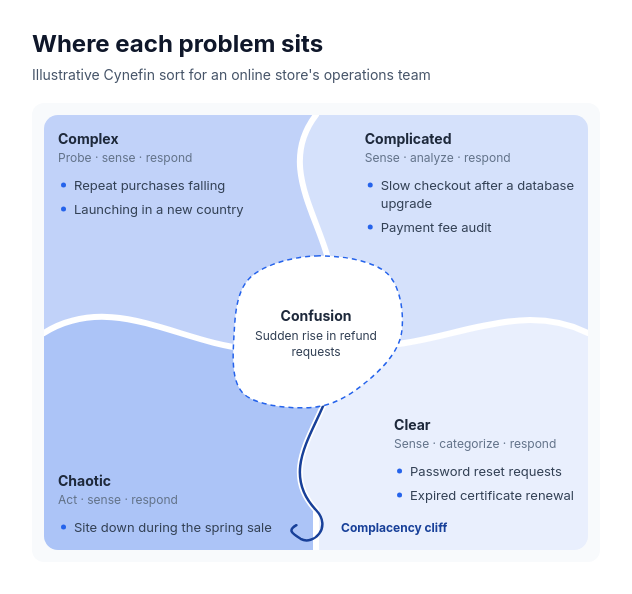 CynefinFor sorting supplied situations, incidents, decisions or kinds of work by how cause and effect relate, so a team agrees how to respond: incident triage, strategy choices, portfolio or project work types, leadership coaching.
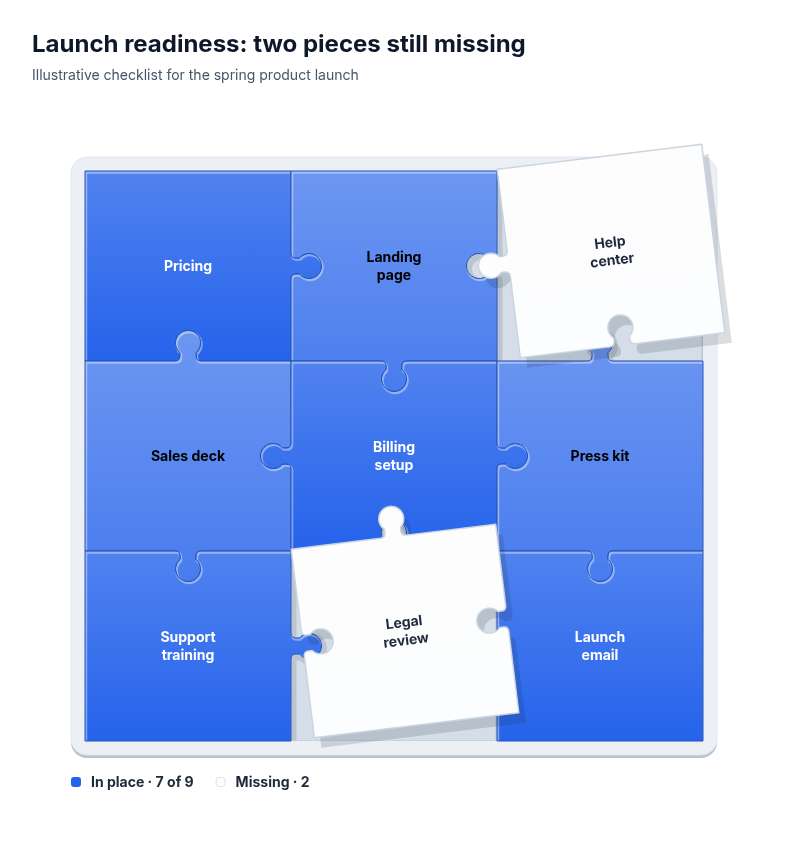 JigsawSuits showing which parts of one whole are in place and which are still missing: launch readiness, capabilities of a platform, roles hired for a team, documents collected for an application, steps of a checklist that has no order.